








This past Saturday night, my wife and I took the 73 bus from our apartment into Cambridge to listen to some live music. A colleague at her school has been inviting us to attend for a while, and this weekend the stars lined up and we were able to go. The performance was at the Lizard Lounge, a longtime local spot for live music, open mics, and poetry slams. We were going to hear Kabir Sen & The Krush Factory. Kabir and his fellow musicians have been performing at the Lizard Lounge on the first Saturday of every month since the mid 1990s.
Like many other Gen Xers, listening to live music was a foundational life experience for me, one that I think created a generation who loved not only listening to good music, but experiencing it together in real life. As we got on the bus, I realized I had left my phone charging on the desk in our apartment. My wife asked if I wanted to hop off, grab it, and then head back out. I paused and for a moment contemplated saying yes, only to say, nope. I am good. Let’s go. I don’t need my phone. You have yours. Now, I am not sure how many of you have left the house for several hours without your phone lately, but in today’s world that feels like an outlier and not a common occurrence.
We got to hang out with Kabir before the show and talk about music and community and generally connect on a human-to-human level. What followed was an evening rich in human experience. The pulse and vibe of the band was a mix of Steel Pulse and Khruangbin, with a funky, soul-laden sound that was intoxicating and fresh. Their music carried a raw, improvisational energy that evolved throughout the live set.
For the first hour or so, I found myself regularly reaching for my phone.
The impulse was real. And then something funny happened. It dissipated.
Eventually I became so engulfed in the energy of the music and the crowd, all these humans coming together to enjoy this real, live moment together, that the need for my digital binky simply went away. I am sorry but Lossless technology pails in comparison to the beat and rhythm the human body feels when surrounded by live music. Drum riffs, keyboards, bass lines, saxophone and vocals distorted into sounds that made you wonder what created that? The crowd was moved to dance and the rhythmic pulse of humans coming together was soulful, it was cosmic and it was real.
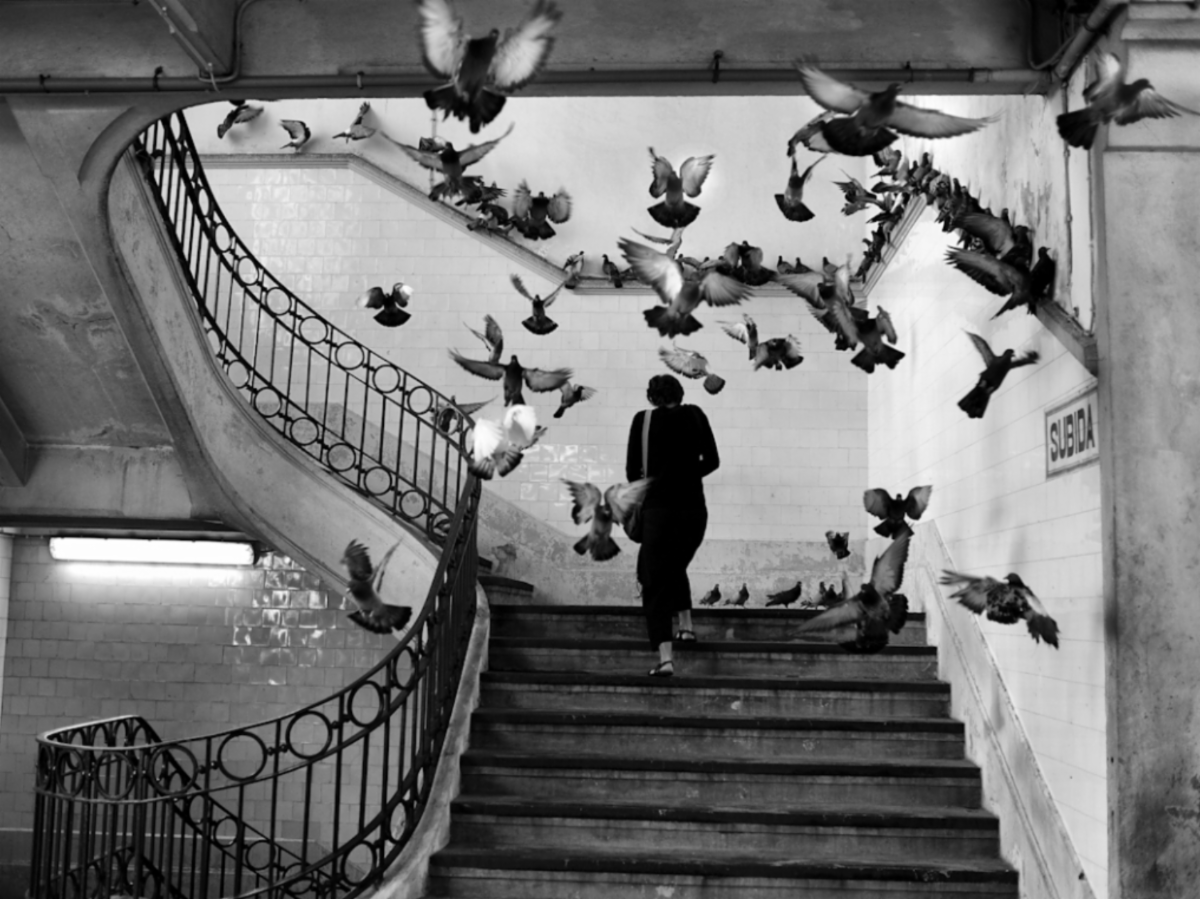
[Missing Photo from Lizard Lounge, I should have brought my film camera]
Reflecting back on this as I fly to Denver for our fall Fellowship convening which starts and ends in person, I realize Saturday night was actually the culmination of months of intentionally trying to live a more analog-forward life.
In January, I deleted my Facebook and Twitter accounts. The Twitter account was particularly difficult because I was fortunate enough to have Barack Obama following me, but both had to go. Then I made an effort to listen to vinyl records while working from home every day. My attempt to train my Spotify AI DJ has resulted in an AI DJ that continually spits out the same 20 songs, so I went back to spinning my own music. Randomly select a record from my collection and listen to both sides.
This led to my digital detox breaks, which for a time still included doomscrolling but now include a walk around my neighborhood, a 20-minute ukulele jam session, or a love fest with one of my cats. Slowly and methodically, I became aware that the choices I was making, even the small ones, were having a fascinating effect.
I was more aware. More connected. More curious. More willing to sit somewhere and observe. But that wasn’t the only thing that changed. It started to influence my work.
Several years ago, I began wondering why we use so much paper at L+D. Our work has always relied heavily on the analog tools designers and creative thinkers use to do their best work. I experimented with replacing the paper with digital tools, only to find myself doubling down on good old-fashioned paper. That eventually led to a design principle for our summer L+D Retreat in New Mexico. For three days at Los Poblanos organic farm, Greg Bamford, Carla Silver, and I facilitated the entire retreat without a slide deck.
We went one step further. Each participant got a sketchbook and art supplies. Carla and I brought our vintage typewriters. We had a printer for printing physical photos. The entire experience was intentionally analog forward. Those who joined us told us how refreshing and powerful it was to be together in a beautiful place with wonderful humans doing important reflective work, together.
One final clue came when I spent the summer building and designing a course I am teaching at the ExCollege at Tufts University. It is an applied futures-thinking course where students use futures and design thinking to build a future world in which they have solved a current human need or challenge. I decided to go back to a tool I used in 1996 when I was teaching theater: a physical paper notebook. No required or forced online discussions on Canvas. Additionally, one assignment requires students to do a Weekly Wander. It is a technology-free, prompt-driven opportunity to explore, observe, and wander with their thoughts.
In the first four weeks of class, both have been well received by a group of academically amazing Gen Z students who seem to be yearning for fewer online discussions and more human-to-human interactions.
And that brings me back to Saturday night. I am beginning to wonder if all of these experiences are signals of something larger. We have spent the past several decades designing a world that makes connection faster, easier, more convenient, more personalized, and increasingly algorithmically curated. Now AI is accelerating that trajectory and yet, I think we are hungry for something else. We are hungry for experiences with other humans. Experiences that require us to show up, pay attention, listen, participate, and be present.
The challenge is that increasingly we have to make a conscious choice to create the space for them. Here is where leaders need to step in. Leaders create the conditions. What conditions are we creating? If you are having a Zoom meeting during the day and everyone is located in the same physical space I would ask you why?
We have to put down the phone. Leave the screen. Go somewhere. Talk to someone random. Strike up a conversation at the coffee line. Listen to a band. Make something with our hands. Take a walk. Sit somewhere and observe. Allow ourselves to be bored, surprised, curious, or completely absorbed in the people and place around us. Going offline is not the point.
Going offline creates the conditions for something we are increasingly hungry for: each other.
So here is my hunch.
The most important skill in the next ten years will not be connecting humans with more technology. It will be connecting humans with humans.
And perhaps that means that in a world of increasingly superficial, passive, and algorithmically curated experiences meant to divide us, human-to-human experiences will become the new luxury. But getting there will require us to make a choice.
This is strange coming from a leader who for much of his career was a deep believer in the integration of technology in education. I think we got some of that innovation and integration right. I also think looking back we got a lot of things wrong. Wisdom comes from knowing the difference and being clear about not repeating those mistakes again. Those of us that have been working in mission driven organizations since the internet came online have been here once before. Maybe we should slow down a little and think about what it means to be human in a world of intelligent machines.
When I see organizations rushing to figure out how to implement AI, I am beginning to wonder if we are asking the wrong question. Instead of asking how quickly we can integrate AI into everything we do, what if we also asked what experiences we want to protect from it? What would it look like to intentionally design technology-free, AI-proof spaces for learning, creating, working, and being together? Maybe it means more wood shops and darkrooms. More time outside. Meetings without slide decks. Experiences designed not around what technology can do for us, but around what humans can only do with each other.
So the invitation is simple. Every once in a while, leave the phone charging on the desk. Get on the bus. Go hear the band. Wander without a destination. Make something with your hands. Sit across from someone you care about and give them your full attention.
The future will give us more technology, more intelligence, and more convenience than we can possibly imagine. Maybe our work now is to make sure we don’t lose each other along the way.Here is my hope, I think we will discover that offline, human to human connections in the real world is the new luxury and it's readily available to all of us.
We just have to choose to live our lives being more intentionally analog forward.