








"We just don't know how decisions are made around here."
I've heard this from time to time, and I've likely spoken them aloud at some point in my work. What's truly behind these words? My trust? My understanding? My alignment with the decision? My trust that others trust me (or don't)?
My first instinct is to explain the process: the generative session we held to gather ideas on how to proceed, the data we collected to ensure an informed decision, and the open office hours we held for community members to offer feedback on the proposed plan.
Trusting the process is different from trusting the decision, never mind the factors that went into engaging it.
My second instinct is to draw boundaries. Here are the decisions that are in my sphere of influence, and here are decisions that are in yours. I reach for this even though we all implicitly know that we need each other in most decisions, and that we'll all need to engage in effort in making them happen.
Who holds decision rights is very different from how we make the call.
How do we navigate that liminal space between possibility and certainty, that space between entertaining a decision and making a choice?
**
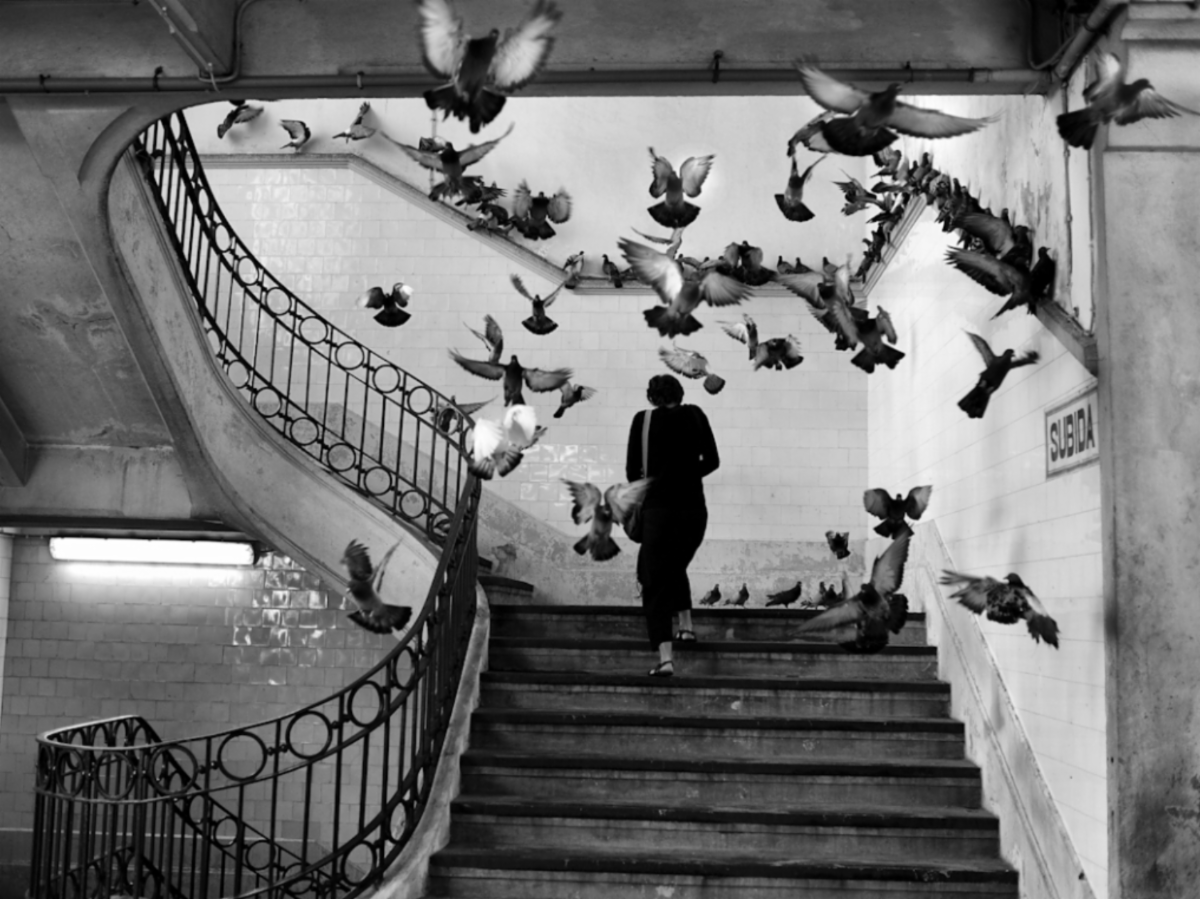
In 1952, Henri Cartier-Bresson published The Decisive Moment, which outlined his criteria by which he took a photograph: the geometry and composition of the frame, the importance of the event unfolding inside it, and an instinct for both that he insisted had to be developed within the photographer long before they clicked the shutter.
How do we capture spontaneity – a joyful moment of emergence and opportunity – while being mindful of careful, artistic composition? Making the decision to snap the shutter is the least of the work. How have we created the conditions prior to the decisive moment? How do we hold possible that a moment might arrive, even if we aren't certain it will arrive?
Cartier-Bresson was clear about what he sought to capture – the stairwell so carefully framed and arranged – but would someone arrive, and would the birds fly? Would someone come along to take the leap?
The decisive moment is itself a liminal space. Everything is composed but nothing has happened just yet. Cartier-Bresson refined his eye for geometry for twenty years. The leap took half a second.
**
We often push off decisions, and then sometimes it's too late to refine our eye, because we're too stretched to really consider how best to frame that decision. Or there are vastly too many eyes to align and refine as you make the call. Sometimes we feel we don't have enough data. Sometimes we don't have enough nerve. Sometimes there isn't enough pressure until we get to the deadline.
We haven't had the pre-conversations to frame the shot before the shot arrives.
There's the teammate who looks for the impact on organizational culture, and will want that surfaced as a criterion. Another leans on reversibility – what would it cost to undo the decision if the outcome doesn’t measure up? Another looks at risk, and entirely at risk. Okay – what does risk mean in any given context?
The factors themselves don't change much. Mission. Financial durability. The opportunity cost of our attention. You might define those costs, that durability, or how the mission meets this context. But what changes is what each one is worth in this decision, in this context, right now – and that's the conversation we almost never have.
There’s a conversation about what factors each of you brings. Not what's written down on a decision rubric, but the factors you lean on most. What does the group bring to one another in the decision?
Is it my job to make the decision, or to support how the decision is made? Is it my job to protect and control, or to help others fulfill a sense of curiosity? Is it my role to bring the criteria that I use for my own decisions, or support the group in seeing and weighing what we have aligned as the most critical factors to consider?
Annie Duke. Roger Martin. Richard Thaler. How often do you have time to take the course before you make the call?
What really matters in the room is not so much being given frameworks for decision, but how we convene and share how we do decisions together by thinking organically and authentically alongside one another.
**
I often see hiring criteria or proposal criteria that are clearly a Frankensteinian construction of individual beliefs, without the actual convergence and alignment that helps a group decide. It feels more like decision criteria theater than a decision tool. Our choice will be based on what option we feel like is aspirational and certain and sustainable and durable over thirty years and what’s the pop factor over the next two years that will attract people to our organization but also feel good for those who have been with us for a long time.
But the more we practice in small stakes, and repeatedly, the more we can extend the meta conversation about how we make decisions – which gives us momentum to engage in the work. And to come to terms with the criteria that truly helps us approach the shot as a tool.
We always approach decisions with our backs to the wall, so we never have that opportunity.
So: what's a decision you'll make in the next few weeks? Ten minutes of writing on the factors each person would weigh. A share-out. Then the minimum factors necessary to weigh – which is the harder and more useful conversation.
A team can do this in an hour. And it can hone your eye when you frame decisive moments time over time, helping you engage in the work as the stakes grow ever higher.


