
Storysharing vs. Storytellling
Estimated Reading Time: 6-9 minutes.
The Power of Storysharing
Christian Long, a dear friend of L+D and a trailblazer in the design space, shared a conversation with school teams at our L+D Expedition: Design Challenge. The topic of his presentation was on storytelling. During his presentation, he didn't open with a framework or set of best practices. He opened with a story. A real story. No slide, just vulnerability. His personal and professional life woven together in ways that made it difficult to tell where one ended and the other began.
And in that moment, he named something I'd been sitting with for awhile – there is a difference between storytelling and storysharing.
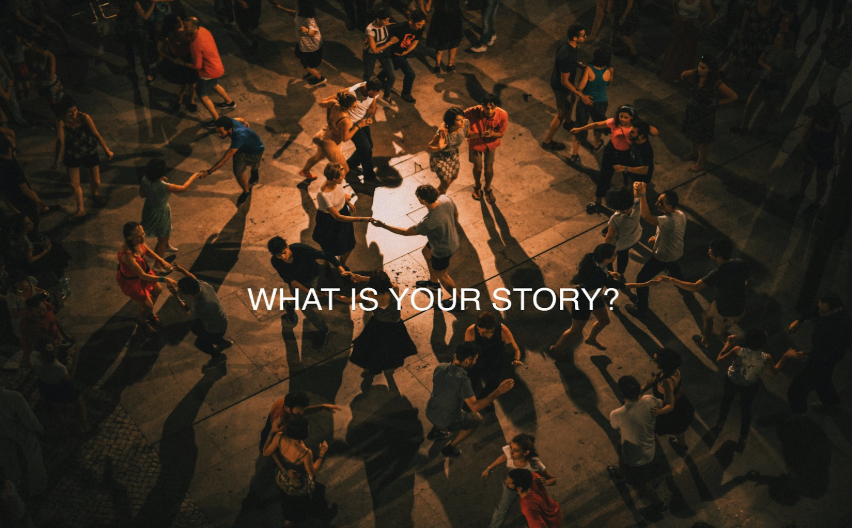
Storytelling, he explained, is often about convincing, persuading, and seeking agreement. It's the attempt to perfect and craft a narrative in order to change minds or win people over. Storysharing is something else entirely. Storysharing is an invitation. An opening. It says: “Here's why this work matters to me, here's what's at stake, here's where I've struggled.” Storysharing also invites others to share their stories in return.
It was a beautiful presentation. It was the kind of presentation that gave me room to pause. Because Christian wasn't talking about the power of stories, he was demonstrating it. He was showing us what it looks like to lead not from a position of having it all figured out, but from a place of honest grappling.
Vulnerability and native curiosity are where stories come alive.
Stories Are Not Problems to Solve
Christian's approach that day revealed something essential about how we engage with the people we design for. When we listen to their stories with the same vulnerability he modeled, we stop seeing challenges as purely technical problems to solve. Instead, we recognize that students, families, and faculty are navigating stories that sometimes constrain them. When we externalize these stories, examine them, and begin to re-author them together, we create conditions for genuine innovation. Not because we've added a new program, but because we've shifted the fundamental narratives that shape how people engage with their work.
Think about the last time a project or initiative met resistance or didn't land the way it was intended. Was it really a technical problem, or was it a story problem?
Design Thinking as Story Prototyping
Learning to storyshare instead of storytell and listen with this expanded vulnerability is an opportunity to practice design as a transformative practice rather than to use it as a methodology. When we share, revise, re-share, and connect, we humanize ourselves and this humanization allows us to solve problems with people. This is different from solving for people and letting the stories we tell about each other rule how we make decisions.
Design thinking gives us a way to prototype new stories safely. It is a vehicle to ask the questions we've been afraid to ask, and to sit with the contradictions inside of us.
When we empathize, we're not just gathering data. We're listening to the stories people tell and the stories they don't know how to tell yet. Design Thinking is not a process, it is a way of being with others, and when we define the problem, we're choosing which story to center. When we ideate, we're asking: what other stories are possible here? And when we prototype and test, we're inviting people into co-authorship. We're saying: does this new story ring true for others? Does it open up space for what matters to us?
The framework itself becomes an invitation to slow down, to question our assumptions, to test the narratives we've inherited against the reality of lived experience. This happens first by listening, and by asking questions.
Here are a few we are recommending you start with:
What would need to be true for this experience to actually serve the people we say we're designing for?
What assumptions would need to change?
What risks would we need to take?
What would we need to give up?
These aren't brainstorming questions. They're exploratory questions. They help us dig beneath surface solutions to find the stories that are actually running the show. They force us to confront the gap between the work we say we're doing and the work we're actually doing.
The question isn't whether we're working with stories in design. We always are. The question is whether we're doing it consciously, critically, and in service of transformation. Storysharing is a direct line to transforming together, and we would love to hear how you can experiment with this small but powerful shift.
